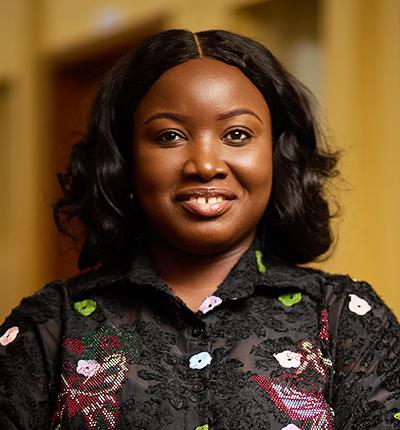
As a Lecturer and Researcher, I am committed to bridging academic excellence with practical applications in climate change resilience and global health to create healthier communities My research work focuses on climate change, environmental sustainability, WASH (Water, Sanitation, and Hygiene) and Occupational Health and Safety.
Area of Expertise:
My expertise comprises the critical public health dimensions of climate change, particularly its implications for water, sanitation, and hygiene (WASH), gendered vulnerabilities, occupational health, and broader environmental health concerns. My experience so far integrates Environmental Science and Public Health; this covers ecosystem studies, disease prevention, health impact tracking and regulatory strategies.
Teaching and Mentorship:
As a Lecturer, I manage the full cycle of instruction from curriculum design and course delivery to experiential fieldwork coordination, student assessment across cohorts. I deliver courses in waste management, hygiene, occupational health and safety, pest and vector control, climate change and health, gendered dimensions of climate action, and water supply and treatment. In addition to teaching, I provide mentorship that supports students in navigating the academic environment while advancing their professional aspirations and personal development goals.
Collaborations and Projects:
I have collaborated on projects aimed at improving environmental and public health standards, applying both laboratory and social science (mixed method) approaches. I supervise undergraduate and postgraduate research within my research focus.
Publications and Presentations:
I have authored and co‑authored peer‑reviewed publications and disseminated my research through conference presentations and scholarly fora. In addition, I have contributed to international scientific dialogue on the health impacts of climate change.
Patronage:
I am the founder and patron of the Environmental Health Club at UHAS-Fred N. Binka School of Public Health. The club is committed to advancing environmental sustainability, promoting education, and fostering a strong culture of community service.
Community Engagement:
I am dedicated to developing and evaluating strategies for effectively disseminating research findings to diverse stakeholders, including policymakers, practitioners and local communities. My work includes leading community outreach programmes that promote environmental health awareness and education, while integrating innovative and indigenous solutions for a healthier and safer environment. In addition, I have contributed to international scientific dialogue on the health impacts of climate change. Beyond teaching and research, I contribute voice‑over narration for short documentaries that highlight public health and environmental issues.
LinkedIn: Forgive Awo Norvivor, PhD | LinkedIn
Specialization
Environmental And Occupational Health, Ethnographic Qualitative Methods, Risk Assessment
Academic Interest
Environmental And Occupational Health, Occupational Health Risk Assessment, Ethnographic Qualitative Methodologies And Analysis, Community Engagement And Scientific Communication
Education
Research Links
Conference
International Climate Change And Population Conference On Africa - (Ccpop-Ghana 2026)
I presented on the "Health implications of Climate change in small and vulnerable coastal communities in Ghana"
Workshop
Environmental Sustainability And Climate Change.
The workshop featured interactive sessions including:
Climate change lessons: Participants learned about its causes, effects, adaptation and mitigation strategies.
Panel discussions: Experts, including faculty from the FNBSPH and student leaders explored environmental sustainability and practical solutions.